Questions to Ask Before Fotona Laser Treatments in Encino, CA
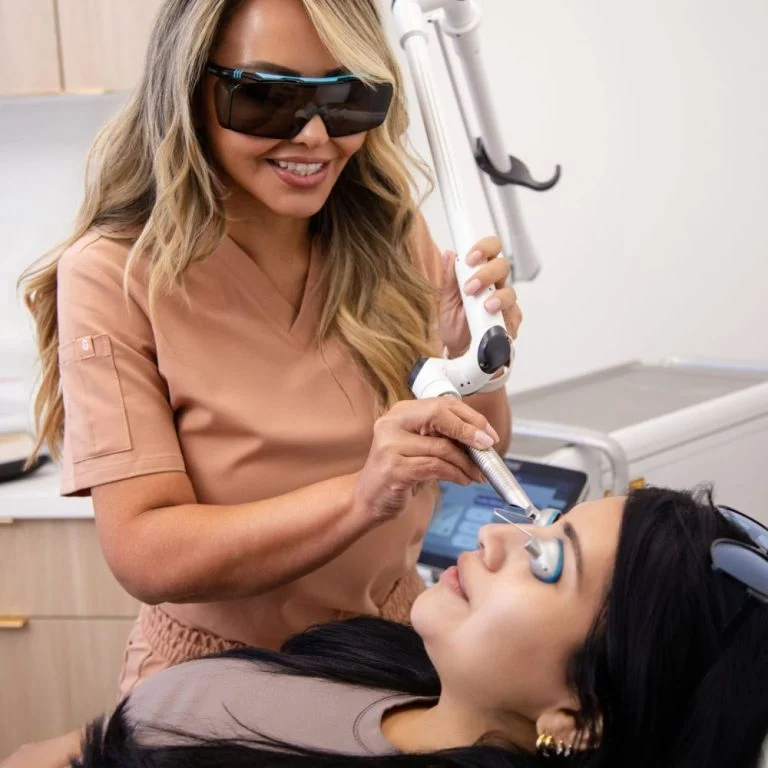
If you are considering Fotona laser treatments in Encino, CA, the most useful thing you can bring to your consultation is not a before-and-after photo from social media. It is a set of smart, specific questions.
Laser treatments can do impressive work when the technology matches the concern, the settings match the skin, and the provider understands both. They can also disappoint when the consultation is rushed, the expectations are vague, or the patient agrees to a treatment plan without understanding what the laser is meant to accomplish. I have seen the difference that a good consultation makes. The best outcomes usually begin with a patient who asks thoughtful questions and a provider who answers them clearly, without sales pressure or vague promises.
Fotona systems are versatile. Depending on the handpiece, settings, and protocol, they may be used for concerns such as texture, laxity, acne scarring, fine lines, pigmentation, vascular issues, and internal collagen remodeling. That versatility is a strength, but it also means “Fotona” is not one single treatment. It is a platform. Before you book, it is worth slowing down and finding out exactly what is being proposed for your skin, your goals, and your tolerance for downtime.
Start with the real issue you want to solve
A surprising number of people walk into a laser consultation asking for a brand name treatment when what they really need is a diagnosis of the problem. That distinction matters. If your main concern is early jowling, the conversation should be about skin laxity and facial support. If it is post-acne texture, the focus should be on scarring patterns, collagen stimulation, and how aggressive the treatment can safely be. If redness is the issue, the right settings and sometimes even the right device may be different from what helps with wrinkles or pores.
The first question to ask is simple: What, exactly, are you treating on my skin, and is Fotona the best option for that concern?
A skilled provider should be able to answer this without resorting to buzzwords. They should point to what they see, perhaps diffuse redness around the nose, shallow rolling scars on the cheeks, mild lower-face laxity, crepey texture under the eyes, and explain whether a Fotona protocol is likely to help. They should also tell you what it will not fix. For example, lasers can improve the look of enlarged pores, but if your main complaint is deep volume loss in the midface, that is not a laser problem. If you have melasma, aggressive heat can sometimes complicate things rather than improve them. If your expectation is a surgical lift, no collagen remodeling treatment should be sold to you as an equivalent.
That kind of honesty is one of the strongest signs that you are in the right office.
Which Fotona treatment are you actually recommending?
This question sounds obvious, but many patients never ask it in plain terms. They hear “Fotona” and assume that covers everything. It does not.
Fotona platforms can be used in several ways. Some protocols are more superficial and focused on brightening or textural refinement. Others work deeper to stimulate collagen and tighten tissue over time. Some involve ablation or controlled resurfacing, while others rely more on thermal stimulation with less visible surface disruption. The same machine name can lead to very different treatment experiences.
Ask your provider to name the specific protocol and explain why it fits your case. If they mention something like SmoothLiftin, FRAC3, PIANO, or another branded sequence, ask what each phase is intended to do. You do not need a physics lecture, but you do need a clear explanation in plain language.
A good answer might sound something like this: one phase targets deeper heating to stimulate collagen, another focuses on uneven texture, and a final step treats superficial irregularities or supports tightening. That helps you understand whether you are signing up for a glow treatment, a resurfacing treatment, a tightening treatment, or a combination.
This also helps with comparison shopping. Two clinics may both advertise Fotona laser treatments in Encino, CA, but the plan, intensity, skill level, and expected results can vary quite a bit.
Who will perform the treatment, and how often do they use this device?
This question separates polished marketing from real clinical experience.
Many offices own advanced devices. Fewer have teams that use them thoughtfully and often. Ownership alone is not expertise. The person setting your parameters matters at least as much as the machine itself.
Ask who will perform your treatment. Is it a physician, a registered nurse, a physician assistant, or another licensed professional working under supervision? Then ask how frequently they perform this specific treatment and what kinds of patients they typically treat. Experience with your skin type and concern matters. Treating mild sun damage on fair skin is not the same as treating acne scars on olive or brown skin. The margin for error changes.
There is also value in asking how they decide settings. An experienced provider does not rely on a one-size-fits-all template. They consider skin tone, treatment history, current skincare, recent sun exposure, tendency toward pigmentation, and how much downtime you can realistically tolerate. If the answer feels generic, that is useful information.
Is my skin type a good candidate?
Not every laser treatment is ideal for every skin type, and this is one of the most important parts of the consultation.
Ask how your Fitzpatrick skin type affects risk and settings. You do not need to know your number ahead of time, though many patients are curious. What matters is whether the office evaluates pigmentation risk carefully, especially if you tan easily, have a history of post-inflammatory hyperpigmentation, or are treating conditions that can flare with heat.
This is particularly relevant in Southern California, where year-round sun exposure changes the equation. Someone in Encino who spends weekends outdoors, drives often, or recently returned from a beach trip may not be an ideal candidate for treatment that day, even if they technically booked in time. A responsible provider will ask about recent sun exposure and may postpone treatment if your skin is more reactive than usual.
If you have melasma, rosacea, eczema, active acne lesions, cold sore history, or a tendency to scar, bring it up early. Do not assume it is obvious. Those details can alter the plan, the pretreatment instructions, or whether laser is the best route at all.
What kind of results are realistic for me?
This is where expectations either become clear or become dangerous.
Ask your provider to describe likely improvement in practical terms. Not “you’ll look amazing” or “this is a game changer,” but specific, honest language. Will your acne scars soften by 20 to 40 percent after a series? Will your skin look tighter but not dramatically lifted? Will fine lines improve while deeper folds remain? Will redness fade partially or substantially? The best answers acknowledge limits.
It is also worth asking whether your goals can be reached with Fotona alone. In many cases, the right answer is no, not entirely. A thoughtful provider may explain that laser can improve texture and stimulate collagen, but that stronger contour changes may require neuromodulators, fillers, biostimulators, microneedling, surgery, or simply more time than one treatment cycle allows.
Patients generally do better when the consultation includes trade-offs. A more aggressive treatment may produce stronger textural change, but it can mean more swelling, peeling, and social downtime. A gentler treatment may fit your schedule better, but results can be subtler and slower.
How many sessions will I need, and how far apart?
One of the biggest frustrations in aesthetics comes from hearing “you’ll need a series” without being told what that actually means in cost, scheduling, or patience.
Ask for a realistic treatment plan. For your concern, how many sessions are typical? How far apart are they spaced? When do most people start noticing change? When are final results usually assessed? Since collagen remodeling takes time, many laser outcomes continue to evolve for weeks or months after the last session. That does not make them better or worse, but it does mean you should not judge success too early.
For example, textural refinement may become visible after initial healing, while tightening effects can develop more gradually. Someone preparing for an event in six weeks needs a different plan than someone thinking long-term over six months. Your provider should account for that.
A treatment calendar also helps you compare value. A less expensive session is not necessarily cheaper if you need twice as many of them.
What will recovery actually look like on day one, day three, and day seven?
This is one of the most practical questions you can ask, and one of the most overlooked.
“Minimal downtime” means different things to different people. To a provider, it may mean you are medically fine to return to daily activities. To a patient, it may mean whether they feel comfortable going to work, attending a meeting, or seeing friends without makeup. Those are not the same thing.
Ask your provider to walk you through recovery by timeline, not just by label. Will you be pink for a few hours, or noticeably red for several days? Will there be swelling, rough texture, tiny dark dots, peeling, bronzing, or dryness? Can you wear mineral makeup the next day, or should you avoid it? Will you need to pause workouts, swimming, hot yoga, or active skincare?
The answer often depends on the protocol. Some Fotona treatments have relatively light downtime. Others, especially those that resurface more aggressively, can require planning. If you have an important event, business travel, photos, or family obligations, this matters more than the marketing phrase attached to the treatment.
In my experience, patients feel far less anxious when someone describes healing plainly. Even small details help, such as whether swelling is usually worse the morning after treatment, whether the skin may feel sandpapery before it looks smoother, or whether post-treatment dryness can last longer than visible redness.
What are the risks for someone with my history?
Every treatment has risks, even when those risks are uncommon. A trustworthy consultation includes them.
Ask specifically about the risks that apply to your skin and medical history. Those may include burns, prolonged redness, swelling, bruising, acne flares, cold sore reactivation, post-inflammatory hyperpigmentation, hypopigmentation, textural changes, delayed healing, or uneven results. If you have taken isotretinoin in the past, had recent facial procedures, used retinoids or acids aggressively, or have an autoimmune condition affecting skin healing, mention it.
This is not about trying to talk yourself out of treatment. It is about informed consent. Patients who understand the downside are usually calmer and more compliant afterward, because they know what is normal and what is not.
You should also ask how complications are handled if they occur. Will the office see you promptly? Is there a clear aftercare line? What products or medications might be used if your skin Fotona Laser Treatments Encino, CA becomes excessively inflamed? Confidence comes not from pretending risk does not exist, but from knowing the office has a plan.
What should I stop using before treatment?
This question can save you from an avoidable reaction.
Many patients use active skincare without realizing how much it can influence laser tolerance. Retinoids, exfoliating acids, benzoyl peroxide, hydroquinone, certain acne medications, self-tanners, and fragranced irritants can all matter. Recent waxing, threading, depilatory creams, or strong peels may also affect timing.
Ask for a written prep plan. Not a vague “avoid harsh products,” but specifics. When should you stop retinol? What about vitamin C if it stings? Can you continue prescription acne topicals? Should you start an antiviral if you have a history of cold sores? If you are prone to pigment changes, does the provider want you on a pigment-suppressing regimen before treatment?
Sun behavior should be part of this discussion too. If you cannot realistically avoid tanning before and after treatment, be honest. It is better to reschedule than to proceed under less-than-ideal conditions.
What aftercare do you recommend, and what results depend on me?
Laser outcomes are not created by the laser alone. They are shaped by how you heal and how well you follow instructions in the first several days afterward.
Ask your provider exactly how they want you to cleanse, moisturize, cool, protect, and monitor your skin. Will you need a bland barrier repair routine for several days? When can you restart active products? How strict must you be with sun protection? What ingredients should you avoid temporarily?
This is also the right time to ask what you can do to preserve results. If you are addressing pigmentation but continue to get unprotected incidental sun exposure driving around Encino every day, your maintenance burden may be higher than you think. If you are treating acne scars but still have active breakouts, controlling the acne should remain part of the plan. If you are hoping for long-term tightening, ask whether maintenance sessions are typical.
The best offices do not frame aftercare as an afterthought. They treat it as part of the treatment itself.
What does the full cost look like, not just the per-session price?
Cosmetic pricing can be slippery if you only ask for the headline number.
Ask whether the quote includes consultation fees, pretreatment skincare, numbing, post-care products, follow-up visits, and all planned passes or treatment areas. A lower quote can stop being lower once those extras are added. You should also ask whether the provider expects one treatment area or several. For example, if facial rejuvenation is the goal, will they also recommend the neck? If not, will the contrast bother you afterward?
It is also reasonable to ask what happens if you need fewer or more sessions than expected. Some offices sell packages. Packages can be helpful, but only if the recommendation is individualized and the policy is clear.
If cost is a concern, say so directly. A good provider would rather stage a treatment plan honestly than have you overcommit and drop out halfway through.
Questions worth bringing to your consultation
Use these as prompts, not a script. The goal is a clear conversation.
- What specific skin concerns are you treating, and why is this Fotona protocol the right match?
- Who will perform the treatment, and how much experience do they have with my skin type and concern?
- How many sessions do you expect I’ll need, what downtime should I plan for, and when will I see results?
- What are the main risks in my case, especially regarding pigmentation, scarring, or prolonged redness?
- What is the total expected cost, including prep, aftercare, and follow-up?
You do not need to ask every possible question in one breath. But if these five are answered well, you will usually leave the consultation with a much clearer sense of whether the clinic is careful and transparent.
The difference between a useful consultation and a sales appointment
Patients often know when something feels off, even if they cannot name it immediately. The provider glances at the skin for thirty seconds, recommends a package before asking about history, and describes every concern as easily fixable. That is not expertise. It is momentum.
A useful consultation has a different pace. Your provider asks what bothers you most, what treatments you have tried, how your skin reacts, what your schedule allows, and what level of change you actually want. They examine the face under good light. They may point out issues you had not considered, such as diffuse sun damage contributing to dullness, or persistent inflammation affecting texture. Just as importantly, they may advise against treatment if your timing, recent sun exposure, or expectations make you a poor candidate that day.
That restraint is worth a lot.
Red flags to pay attention to
A few warning signs come up again and again in cosmetic consultations.
- The office cannot explain which Fotona protocol they are recommending or what it is meant to do.
- You are promised dramatic results in one session for concerns that usually require a series.
- Risks, downtime, or pigment issues are brushed aside, especially if you have medium to deeper skin tones.
- No one asks about your medications, active skincare, recent sun exposure, or history of cold sores.
- You feel pushed to buy a package before your questions are answered.
A treatment does not need to be perfect to be worthwhile, but it does need to be honestly presented.
Why location matters more than people think
Encino patients often have a specific set of practical concerns. Many are balancing visible results with limited downtime. They want to look refreshed, not obviously treated. They may have frequent professional meetings, social obligations, outdoor habits, or school pickups that make a week of heavy redness unrealistic. That is one reason consultations for Fotona laser treatments in Encino, CA should feel tailored, not generic.
Local lifestyle matters. So does climate. Bright sun, heat, and car time all affect post-laser planning. Even something as ordinary as whether you can commit to strict sunscreen reapplication can influence how aggressive a provider should be. The best consultations account for the life you actually live, not the ideal patient in a brochure.
The best question is often the simplest one
After all the technical details, there is one more question that deserves a place in every consultation: If I were your family member, would this be the treatment you’d recommend for my skin right now?
It is direct, and it tends to cut through the script.
A confident, ethical provider will not be offended by it. They will answer with context. Sometimes the answer is yes, this is a strong option. Sometimes it is yes, but only after a pigment-prep routine or a change in timing. Sometimes it is no, another modality would make more sense first. That kind of judgment is exactly what you are paying for.
Laser treatments can be excellent tools. Fotona systems, in skilled hands, can address a range of concerns with precision and versatility. But technology does not replace discernment. The right questions help you find out whether the office in front of you has both.
OMNIA Wellness Center
Address: 16430 Ventura Blvd Ste 207, Encino, CA 91436
Phone number: +18183868511
FAQ About Fotona Laser Treatments Encino, CA
What is a Fotona laser good for?
A Fotona Laser system is a versatile, dual-wavelength medical laser used primarily for non-surgical skin tightening, anti-aging rejuvenation, and dermatological treatments.
How much does the Fotona laser cost?
The cost of a Fotona laser depends heavily on whether you are looking to purchase a laser machine for a medical practice or are a patient seeking a laser treatment at a medspa.
Is a Fotona laser worth it?
A Fotona laser treatment is generally worth it if you want non-surgical skin tightening, improved texture, and collagen stimulation with very little downtime.